
What Is AI Security? 7 Powerful Ways AI Security Is Changing Cybersecurity in 2026
What Is AI Security? Understanding the Future of Cybersecurity in 2026
By Fact Nama
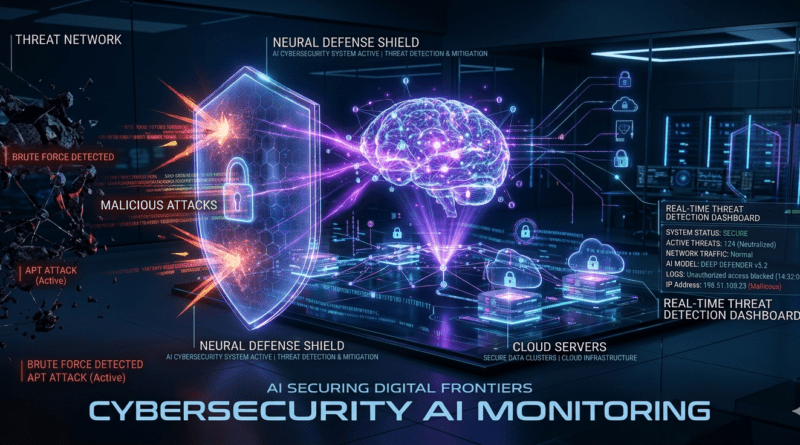
What is AI security and why is it becoming important in 2026? As cyberattacks increase worldwide, businesses are rapidly investing in AI security systems to protect sensitive data, cloud networks, and digital infrastructure.
Cyber threats are becoming more advanced every year, forcing businesses and governments to search for smarter ways to protect sensitive data. This is where AI security has become one of the most discussed technologies in modern cybersecurity.
But many people still ask: what is AI security?
In simple terms, AI security refers to the use of artificial intelligence to protect digital systems, networks, applications, and data from cyberattacks. It also includes securing AI systems themselves from misuse, manipulation, and hacking attempts.
As artificial intelligence becomes deeply connected with banking, healthcare, e-commerce, cloud computing, and national security, experts believe AI security will play a critical role in protecting the future internet.
Cybersecurity experts believe what is AI security has become one of the fastest-growing online searches in 2026.
What Is AI Security and How Does It Work?
AI security is the process of using artificial intelligence technologies like machine learning and deep learning to detect, prevent, and respond to cybersecurity threats.
Modern AI security systems can analyze massive amounts of data in real time. These tools identify unusual behavior, suspicious activities, malware attacks, phishing attempts, and unauthorized access much faster than traditional security systems.
Unlike older cybersecurity tools that depend heavily on predefined rules, AI-powered systems continuously learn from new threats and adapt automatically.
Many organizations now use AI security tools to:
- Detect cyberattacks
- Prevent data breaches
- Monitor cloud systems
- Identify fraud
- Improve threat response
- Protect sensitive customer data
At the same time, companies are also focusing on protecting AI models themselves from attacks like data poisoning, prompt injection, and model theft. Read more in Fact Nama’s Technology & Cybersecurity section
Why AI Security Is Becoming So Important
The digital world is expanding rapidly. Businesses now rely on cloud services, remote work systems, APIs, AI chatbots, and connected devices.
This growth has increased the number of possible attack points for hackers.
Cybersecurity experts warn that traditional security systems alone are no longer enough to handle modern cyber threats. Hackers are also using AI tools to create more sophisticated phishing scams, malware, and automated attacks.
This is why AI security has become essential in 2026.
According to industry reports, organizations using AI-driven cybersecurity systems can identify and contain security breaches much faster than companies relying only on manual security operations.
AI tools help reduce human workload while improving detection speed and accuracy.
Understanding what is AI security helps companies protect sensitive customer information from hackers.
How AI Security Works
AI security systems use advanced algorithms to study patterns inside networks and applications.
When the AI notices unusual activity outside normal behavior, it immediately flags it as a potential threat.
For example:
- If an employee suddenly logs in from another country, the AI system may trigger a warning.
- If malware attempts to spread through a network, AI can isolate infected systems automatically.
- If suspicious transactions appear in banking systems, AI fraud detection tools can block them instantly.
Machine learning models improve over time by analyzing previous cyberattacks and adapting to new hacking techniques.
Some modern AI security platforms also use generative AI to provide human-readable threat reports and automated recommendations for security teams.
Benefits of AI Security

1. Faster Threat Detection
AI security tools can analyze huge amounts of network data within seconds. This allows organizations to detect cyber threats much earlier than traditional systems.
2. Improved Incident Response
AI-powered automation helps security teams respond to attacks quickly, reducing damage and downtime.
3. Reduced Human Error
Manual cybersecurity operations can lead to mistakes. AI systems automate repetitive tasks and minimize security gaps caused by human oversight.
4. Better Fraud Detection
Banks and financial institutions use AI security to monitor suspicious transactions and prevent identity theft.
5. Stronger Cloud Security
As businesses move to cloud environments, AI tools help monitor cloud access, detect abnormal behavior, and protect sensitive data.
6. Continuous Monitoring
Unlike human teams, AI security systems can monitor networks 24/7 without interruption.
7. Predictive Threat Analysis
AI can analyze historical attack patterns to predict future cybersecurity threats before they happen.
Major Risks of AI Security
While AI security provides many advantages, it also introduces new cybersecurity risks.
Data Poisoning Attacks
Hackers can manipulate AI training data to corrupt how AI systems behave. This is known as data poisoning.
Prompt Injection
Attackers may use malicious prompts to trick AI systems into revealing confidential information or performing harmful actions.
AI Model Theft
Cybercriminals can attempt to steal AI models, algorithms, or sensitive datasets from organizations.
Deep fake Threats
AI-generated deep fake videos, audio, and images are increasingly being used for scams, fraud, and misinformation campaigns.
Privacy Concerns
If AI systems are not properly secured, sensitive customer information may become exposed during processing or storage.
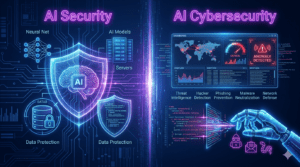
AI Security vs AI Cybersecurity
Many people confuse AI security with AI cybersecurity, but they are slightly different.
AI Security
Focuses on protecting AI systems, AI models, training data, and infrastructure from attacks.
AI Cybersecurity
Refers to using AI tools to improve cybersecurity defenses against hackers and cyber threats.
Both areas are closely connected and growing rapidly together.
Common Uses of AI Security
Endpoint Security
AI protects laptops, servers, and mobile devices by detecting malware and suspicious behavior in real time.
Fraud Prevention
Financial institutions use AI security systems to identify unusual banking activities and prevent fraud.
Identity and Access Management (IAM)
AI analyzes user behavior and strengthens authentication systems to prevent unauthorized access.
Phishing Detection
Machine learning algorithms scan emails and messages to identify phishing scams before users interact with them.
Cloud Protection
AI security tools monitor cloud platforms continuously for vulnerabilities, breaches, and suspicious activity.
Challenges Facing AI Security
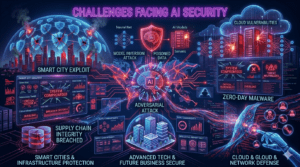
Although AI security technology is improving rapidly, experts say several challenges still exist.
Lack of Skilled Professionals
There is currently a global shortage of cybersecurity experts with advanced AI knowledge.
Rapid AI Adoption
Organizations are adopting AI tools faster than security controls can keep up.
Complex AI Systems
Some AI models operate like “black boxes,” making it difficult to understand how decisions are made.
Regulatory Pressure
Governments worldwide are introducing new AI regulations related to privacy, ethics, and data protection.
Best Practices for AI Security
Cybersecurity experts recommend several best practices for protecting AI systems effectively.
- Use strong encryption for sensitive data
- Regularly monitor AI systems
- Apply strict access controls
- Test AI models for vulnerabilities
- Update training datasets frequently
- Integrate AI security with existing cybersecurity tools
- Conduct employee cybersecurity training
Organizations are also increasingly adopting international frameworks such as NIST AI Risk Management Framework and ISO AI security standards.
The Future of AI Security
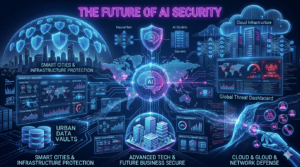
The future of AI security looks highly significant as artificial intelligence continues reshaping industries worldwide.
Experts predict that AI-powered cybersecurity solutions will become smarter, faster, and more automated over the next few years.
However, cybercriminals are also evolving rapidly using AI-driven attack techniques.
This means organizations must continuously invest in advanced AI security systems to protect customer data, maintain trust, and comply with future regulations.
For businesses operating online, AI security is no longer optional — it is becoming a necessity.
Frequently Asked Questions
What is AI security?
AI security is the use of artificial intelligence to protect systems, networks, and data from cyber threats.
How can AI be used for security?
AI can detect threats, monitor suspicious behavior, stop fraud, and automate cybersecurity operations.
What are the risks of AI security?
Common risks include data poisoning, prompt injection, deepfakes, and AI model theft.
Is AI security important in 2026?
Yes, AI security is becoming essential because cyberattacks are increasing globally.