
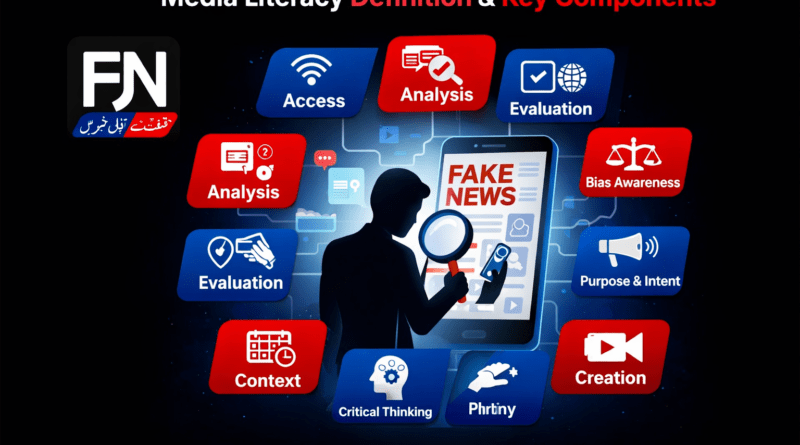
Media Literacy Definition & Key Components: 9 Essential Skills Everyone Needs in the Digital Age
Introduction
The internet has made information more accessible than at any other time in history—but it has also made misinformation faster, cheaper, and harder to detect. From viral social media posts to AI-generated headlines, people are exposed to more content than they can realistically verify. This is where media literacy becomes essential.
Understanding the media literacy definition and key components is no longer an academic exercise. It is a practical life skill that affects how people vote, how they understand science, how they respond to crises, and how they trust information online. In an era shaped by algorithms, influencers, and 24/7 news cycles, the ability to critically evaluate media is directly tied to informed citizenship and personal decision-making.
This Fact Nama guide explains media literacy in clear terms, breaks down its core components, and shows how it works in real life—without jargon, hype, or fear-driven narratives.
What Is Media Literacy? (Clear Definition)
Media literacy is the ability to access, analyze, evaluate, create, and act on media messages across different platforms and formats.
At its core, media literacy helps people answer five critical questions:
-
Who created this message?
-
Why was it created?
-
What techniques are being used to influence me?
-
What information is missing or emphasized?
-
How should I respond responsibly?
According to research frequently cited by organizations like Pew Research Center, media-literate individuals are significantly better at identifying misleading content and distinguishing opinion from verified fact.
Media literacy is not about distrusting all media. It is about informed skepticism—questioning content without rejecting credible journalism or evidence-based reporting.
Why Media Literacy Matters More Than Ever
The importance of media literacy has grown sharply due to three major shifts:
1. The Rise of Misinformation Ecosystems
False or misleading information spreads faster than corrections, especially on social platforms optimized for engagement rather than accuracy.
2. AI-Generated and Synthetic Media
Deepfakes, automated articles, and manipulated visuals blur the line between real and fabricated content.
3. Declining Trust in Institutions
Public trust in news, science, and government has weakened, making audiences more vulnerable to emotionally charged or biased narratives.
Organizations such as BBC and Reuters have repeatedly emphasized media literacy as a defense against information disorder.
The Key Components of Media Literacy (Explained Simply)
While definitions vary slightly, most experts agree on eight to nine core components that together form media literacy.
1. Access
The ability to find and use media content across platforms—news websites, social media, video, podcasts, and data sources.
Access includes:
-
Knowing how algorithms shape what you see
-
Understanding paywalls, subscriptions, and source credibility
-
Using search tools effectively
Without access skills, evaluation is impossible.
2. Analysis
Analysis involves breaking down media messages to understand structure, language, visuals, and framing.
Key analytical questions include:
-
What claims are being made?
-
What evidence is provided?
-
What emotions does the content trigger?
This component is central to critical media literacy, which Fact Nama explores in depth in its dedicated guide.
3. Evaluation
Evaluation is the process of judging credibility and reliability.
It includes:
-
Verifying sources
-
Checking author expertise
-
Comparing claims with trusted references
This is where fact-checking tools and verification frameworks become essential, especially when dealing with breaking news.
4. Understanding Media Bias
No media is completely neutral. Media literacy teaches readers to identify:
-
Political bias
-
Commercial interests
-
Cultural framing
-
Selection bias (what is included or excluded)
Recognizing bias does not mean dismissing content—it means contextualizing it.
5. Awareness of Purpose and Intent
Every media message has a purpose:
-
To inform
-
To persuade
-
To entertain
-
To provoke emotion or action
Understanding intent helps distinguish journalism from propaganda, advertising, or opinion-driven content.
6. Media Creation and Participation
Modern media literacy includes the ability to create responsible content, not just consume it.
This involves:
-
Ethical sharing
-
Accurate sourcing
-
Avoiding misleading headlines or visuals
-
Understanding legal and ethical implications
Creation without literacy contributes to misinformation cycles.
7. Critical Thinking and Reflection
Media literacy is inseparable from critical thinking.
It requires:
-
Slowing down before reacting
-
Questioning viral narratives
-
Separating evidence from emotion
This component directly links media literacy to education, civic engagement, and democratic resilience.
8. Information Context and Timing
Content must be understood in context:
-
When was it published?
-
Has new evidence emerged?
-
Is the content recycled or outdated?
Old information shared in a new crisis can be just as harmful as false information.
9. Ethical and Civic Responsibility
The final component is ethical awareness.
Media-literate individuals understand:
-
Their role in information spread
-
The impact of sharing unverified claims
-
The social consequences of misinformation
This component moves media literacy beyond personal skill into collective responsibility.
Media Literacy vs Information Literacy (Key Differences)
Although often used interchangeably, they are not identical.
-
Information literacy focuses on finding and evaluating data and sources.
-
Media literacy includes interpretation, messaging, visuals, and audience influence.
Media literacy is broader and more relevant to social media, video platforms, and digital news ecosystems.
Real-World Examples of Media Literacy in Action
Example 1: Viral Health Claims
A viral post claims a household remedy cures a disease. A media-literate reader checks:
-
Original source
-
Medical authority references
-
Whether credible outlets confirm the claim
Example 2: Political Content
A political video uses emotional language and selective clips. Media literacy helps identify:
-
Editing techniques
-
Missing context
-
Sponsorship or agenda
Example 3: AI-Generated Images
A dramatic image circulates during a crisis. Media literacy prompts:
-
Reverse image searches
-
Verification with established outlets
-
Caution before sharing
Common Myths About Media Literacy
Myth 1: Media literacy means distrusting all media
Fact: It means understanding how media works—not rejecting journalism.
Myth 2: Only students need media literacy
Fact: Adults are often more vulnerable to misinformation than younger users.
Myth 3: Media literacy is politically biased
Fact: It is a neutral skill applicable across ideologies.
Expert Perspectives and Research Insights
Studies referenced by World Health Organization during public health crises have shown that media literacy reduces the spread of harmful false claims.
Academic research consistently links media literacy education to:
-
Improved critical thinking
-
Reduced belief in conspiracy theories
-
Higher trust in credible journalism
Actionable Takeaways for Readers
To strengthen your media literacy:
-
Pause before sharing emotionally charged content
-
Check at least two credible sources
-
Learn basic fact-checking techniques
-
Understand platform algorithms
-
Follow trusted, transparent news outlets
Frequently Asked Questions (FAQ)
What is media literacy and its components?
Media literacy is the ability to access, analyze, evaluate, create, and responsibly engage with media content using critical thinking skills.
What are the key components of literacy?
Core components include access, analysis, evaluation, critical thinking, context awareness, and ethical responsibility.
What are the 7 components of information literacy?
They typically include identifying needs, searching effectively, evaluating sources, using information ethically, and applying knowledge responsibly.
Why is media literacy important today?
It helps people detect misinformation, understand bias, and make informed decisions in a digital-first world.
Conclusion
Understanding the media literacy definition and key components is no longer optional. It is a foundational skill for navigating news, social media, education, and civic life responsibly. As information ecosystems become more complex, media literacy empowers individuals not to fear media—but to understand it.
Fact Nama continues to build resources that support informed, evidence-based media consumption in an age of constant information overload.
Read More (Fact Nama)
Sources (Authoritative References Only)
-
Pew Research Center
-
Reuters
-
World Health Organization
