
Truth Under Pressure: How to Become a Professional Fact Checker in the Digital Age 2026
Introduction
False information now spreads faster than corrections. In an era shaped by viral posts, AI-generated content, and polarized media, professional fact checkers have become essential to journalism, publishing, and public trust. Their work sits quietly behind headlines, ensuring claims are accurate, sources are credible, and context is not distorted.
If you are curious about how to become a professional fact checker, the path is more accessible—and more demanding—than ever. It requires sharp research skills, ethical judgment, and the ability to work under pressure without bias. Fact checking is not about opinions or “gotchas.” It is about evidence, verification, and responsibility.
This in-depth guide explains what professional fact checkers actually do, the skills and education that matter most, realistic salary expectations, and step-by-step ways to enter the field—whether through newsrooms, nonprofits, or freelance work.
What Is a Professional Fact Checker?
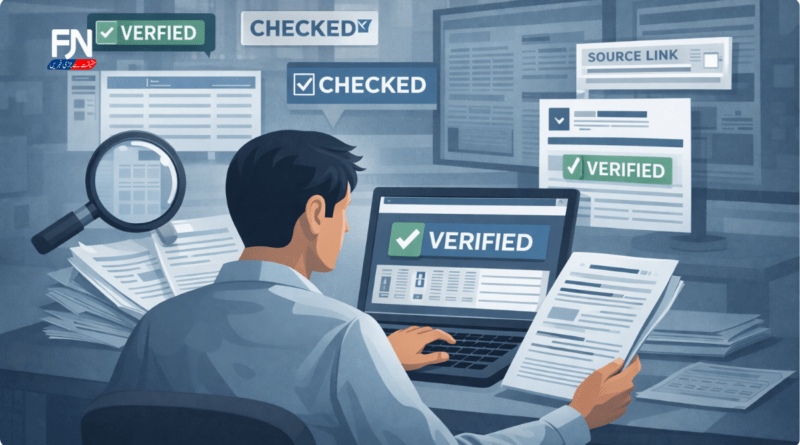
A professional fact checker is responsible for verifying the accuracy of factual claims before publication. This includes checking names, dates, statistics, quotations, historical context, and source credibility across multiple formats:
-
News articles and investigations
-
Magazine features and long-form journalism
-
Books, documentaries, and podcasts
-
Social media content and viral claims
-
Corporate reports and policy briefs
Fact checkers do not rewrite stories or edit style. Their role is to confirm whether statements are true, supported, and fairly presented. In major news organizations, fact checking acts as a final safeguard before publication—reducing legal risk and protecting credibility.
Unlike casual online “debunking,” professional fact checking follows documented standards, transparent sourcing, and strict editorial ethics.
Why Fact Checking Matters More Than Ever
The need for professional fact checkers has grown for three major reasons:
1. The Scale of Digital Misinformation
Social platforms reward speed and engagement, not accuracy. False claims can reach millions before corrections appear—if they appear at all.
2. AI-Generated Content Risks
Generative AI tools can produce fluent but incorrect information, fabricated sources, or outdated data. Fact checkers increasingly audit AI-assisted reporting.
3. Legal and Ethical Accountability
Errors can result in defamation lawsuits, reputational harm, or public distrust. Many organizations rely on fact checkers to reduce legal exposure.
According to research regularly cited by organizations like Pew Research Center, public trust in media depends heavily on perceived accuracy and transparency—both core outcomes of rigorous fact checking.
What Does a Professional Fact Checker Do Day to Day?
A typical fact-checking workflow includes:
-
Claim extraction: Identifying every factual assertion in a piece
-
Source verification: Confirming primary and secondary sources
-
Lateral reading: Checking claims across independent outlets
-
Data validation: Verifying statistics, studies, and methodologies
-
Context checks: Ensuring facts are not misleading or incomplete
-
Documentation: Logging sources so editors can review evidence
Fact checkers frequently contact experts, institutions, and authors directly. They must also flag ambiguous claims or areas where certainty is not possible.
In investigative reporting, fact checking can take weeks and involve hundreds of individual checks.
Core Skills Every Professional Fact Checker Needs
Hard Skills (Technical)
-
Advanced online research and database use
-
Source evaluation and credibility assessment
-
Data literacy and basic statistical reasoning
-
Understanding of media law and defamation risk
-
Familiarity with public records and FOIA requests
Soft Skills (Human)
-
Extreme attention to detail
-
Clear written communication with editors and writers
-
Ethical judgment and independence
-
Intellectual humility and skepticism
-
Ability to meet tight deadlines
Fact checkers must challenge claims—even from senior reporters—without ego or confrontation. Professionalism matters as much as accuracy.
Education: Do You Need a Degree?
There is no single required degree to become a professional fact checker. However, many successful fact checkers have backgrounds in:
-
Journalism
-
Political science
-
History
-
Law
-
Science or public health
-
Library and information science
What matters most is demonstrated research ability and editorial judgment. Short courses, newsroom training, and on-the-job experience often carry more weight than formal credentials alone.
Some universities and journalism institutes now offer specialized verification and media literacy programs aligned with professional standards.
Step-by-Step: How to Become a Professional Fact Checker
Step 1: Learn Professional Verification Methods
Begin by mastering how professionals verify claims—not how social media debates facts. Focus on:
-
Primary vs. secondary sources
-
Lateral reading (opening multiple tabs, not deep scrolling)
-
Reverse image and video searches
-
Identifying conflicts of interest
Resources published by organizations such as Poynter Institute are widely used in newsrooms.
Step 2: Practice Fact Checking Real Content
Choose published articles, opinion pieces, or viral claims and:
-
Highlight factual statements
-
Independently verify each claim
-
Document sources clearly
This practice helps build a fact-checking portfolio, even before paid work.
Step 3: Build a Fact-Checking Portfolio
A strong portfolio may include:
-
Annotated fact-checking samples
-
Research memos showing source evaluation
-
Explanations of disputed or ambiguous claims
-
Corrections you identified and justified
Portfolios matter more than résumés for entry-level roles.
Step 4: Apply for Entry-Level or Freelance Roles
Look for opportunities at:
-
Newsrooms and magazines
-
Nonprofit verification organizations
-
Academic publishers
-
Freelance platforms (for early experience)
Well-known fact-checking organizations include Snopes and PolitiFact, though competition is high.
Step 5: Network Within Journalism Circles
Fact checking is a small, reputation-driven field. Networking helps you:
-
Learn about unposted opportunities
-
Receive referrals from editors
-
Understand newsroom expectations
Professional conduct and reliability often lead to repeat assignments.
Salary: How Much Do Professional Fact Checkers Earn?
Earnings vary by employer, experience, and location.
-
Entry-level newsroom roles: $45,000–$65,000/year
-
Experienced fact checkers: $70,000–$90,000/year
-
Freelance rates: $25–$60/hour, depending on complexity
At elite publications like The New Yorker, experienced fact checkers can earn competitive professional salaries due to the intensity and legal sensitivity of the work.
Freelancers may earn more per hour but face income variability.
Common Myths About Fact Checking
Myth 1: Fact Checkers Just Google Things
Reality: Professional fact checking involves primary sources, expert interviews, and legal awareness—not surface-level searches.
Myth 2: Fact Checkers Are Biased Referees
Reality: Ethical fact checkers do not judge opinions—only verifiable claims.
Myth 3: AI Can Replace Fact Checkers
Reality: AI tools assist research but cannot assess context, intent, or credibility reliably.
Fact Checking vs Journalism: What’s the Difference?
Fact checkers and journalists work together but play distinct roles.
-
Journalists gather information and craft narratives
-
Fact checkers independently verify claims before publication
Many journalists begin as fact checkers, gaining deep exposure to reporting standards and source evaluation.
Tools Professional Fact Checkers Use
-
Advanced search operators
-
Public records databases
-
Reverse image and video tools
-
Academic journals and government archives
-
Editorial style guides and verification checklists
No tool replaces judgment. Tools assist—but humans decide.
Ethical Standards and Trust
Professional fact checkers follow strict ethical principles:
-
Transparency in sourcing
-
Independence from political or commercial pressure
-
Correction of errors without defensiveness
-
Respect for uncertainty
Organizations like Reuters and BBC publish editorial standards that guide verification practices worldwide.
Trust is built not by perfection, but by accountability.
Actionable Takeaways
-
Fact checking is a career, not a hobby
-
Skills matter more than degrees
-
Portfolios outperform résumés
-
Ethics define long-term success
-
Demand for verification is growing—not shrinking
Frequently Asked Questions (FAQ)
How long does it take to become a professional fact checker?
With focused practice, many people build entry-level readiness within 6–12 months.
Is fact checking a good career path?
Yes, especially for those who value accuracy, ethics, and behind-the-scenes influence.
Can fact checkers work remotely?
Many freelance and nonprofit roles allow remote work, though newsroom positions may be hybrid.
Do interviewers really fact check candidates?
Yes. In journalism, exaggerations are often verified.
Conclusion
Learning how to become a professional fact checker means committing to evidence, patience, and ethical responsibility in an age of information overload. The role may not come with bylines or public attention, but it shapes the credibility of everything readers trust.
For those who value truth over speed and verification over virality, fact checking offers a meaningful, growing career at the heart of modern journalism.
Read More (Fact Nama)
Sources (Authoritative)
-
Reuters Editorial Standards
-
Poynter Institute Verification Resources
-
Pew Research Center (media trust studies)
Fact Nama — Independent journalism, verified.
