
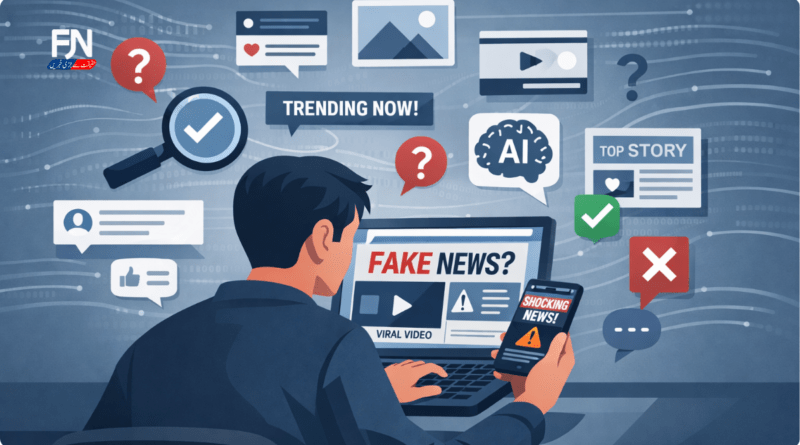
Media Literacy and Critical Thinking: The Essential Skills for Navigating the Digital Age 2026
Introduction
In today’s always-connected world, people consume more information in a single day than previous generations encountered in weeks. News alerts, social media posts, videos, memes, and AI-generated content shape opinions, influence behavior, and even affect democratic processes. Yet not all information is accurate, balanced, or presented in good faith. This reality makes media literacy and critical thinking essential life skills rather than optional academic concepts.
Media literacy helps individuals understand how media messages are created, framed, and distributed. Critical thinking enables them to question those messages, evaluate evidence, recognize bias, and reach reasoned conclusions. Together, these skills allow people to move beyond passive consumption and become informed, responsible participants in the digital public sphere. This Fact Nama guide explains what media literacy and critical thinking mean, why they matter, how they work together, and how individuals can apply them in everyday digital life.
What Is Media Literacy and Critical Thinking?
Defining Media Literacy
Media literacy is the ability to access, analyze, evaluate, and create media in various forms, including news articles, television, social media, advertising, and digital platforms. It focuses on understanding how media messages are constructed and why they are presented in specific ways.
Defining Critical Thinking
Critical thinking is the ability to analyze information logically, question assumptions, assess evidence, and form independent judgments. In a media context, it helps people decide whether a claim is credible, misleading, biased, or false.
Why They Are Interconnected
Media literacy provides the tools; critical thinking provides the mindset. Without critical thinking, media literacy becomes mechanical. Without media literacy, critical thinking lacks context. Together, they form a defense against misinformation and manipulation.
Why Media Literacy and Critical Thinking Matter More Than Ever
The digital environment rewards speed, emotion, and engagement—often at the expense of accuracy. Research from Pew Research Center consistently shows that large segments of the public encounter false or misleading information online, often unintentionally.
Key reasons these skills are critical today include:
-
Information overload: People must filter vast amounts of content daily
-
Algorithmic amplification: Platforms prioritize engagement, not truth
-
Misinformation and disinformation: False content spreads faster than corrections
-
AI-generated media: Images, audio, and video can now be convincingly fabricated
Media literacy and critical thinking help individuals slow down, verify claims, and resist emotional manipulation.
The Five-Step Critical Process in Media Literacy
Educators and researchers often describe media literacy as a structured critical process. While models vary, most include these five steps:
1. Access
Finding and recognizing media content across platforms.
2. Analyze
Examining language, images, tone, and framing.
3. Evaluate
Judging credibility, evidence, and intent.
4. Reflect
Considering personal biases and emotional responses.
5. Create
Producing or sharing media responsibly and ethically.
This process turns passive viewers into active participants.
Media Literacy Skills in Real Life: Practical Examples
News Consumption
-
Comparing multiple news sources
-
Identifying opinion versus reporting
-
Checking original data or documents
Social Media
-
Recognizing clickbait headlines
-
Questioning viral claims before sharing
-
Understanding influencer sponsorships
Advertising
-
Identifying emotional appeals
-
Recognizing unrealistic portrayals
-
Understanding target demographics
Visual Media
-
Analyzing photo manipulation
-
Understanding selective framing
-
Questioning what is excluded from images
These examples show how media literacy and critical thinking apply far beyond the classroom.
Critical Thinking in Simple Words
In simple terms, critical thinking means not believing everything at first glance. It involves asking:
-
Does this make sense?
-
What evidence supports this claim?
-
Who benefits if I believe this?
These questions form the foundation of rational decision-making.
Media Literacy vs. Critical Literacy: What’s the Difference?
Media literacy focuses on how media works.
Critical literacy goes further by examining power, ideology, and representation.
Critical literacy asks:
-
Whose voices are missing?
-
Who has power over the narrative?
-
How does this message reinforce or challenge social norms?
Both approaches are complementary and often overlap in modern education.
The Role of Media Literacy in Democracy
A healthy democracy depends on informed citizens. When people cannot distinguish facts from falsehoods, public debate becomes polarized and manipulated. According to the American Psychological Association, media literacy combined with critical thinking can reduce susceptibility to misinformation and improve civic reasoning.
These skills help citizens:
-
Evaluate political claims
-
Understand policy debates
-
Resist propaganda and extremism
-
Engage respectfully with opposing views
Common Myths About Media Literacy and Critical Thinking
Myth 1: Media Literacy Is Just About Fake News
Fact: It also covers advertising, entertainment, algorithms, and cultural representation.
Myth 2: Critical Thinking Makes People Cynical
Fact: It encourages healthy skepticism, not distrust of everything.
Myth 3: Only Students Need Media Literacy
Fact: Adults are equally vulnerable to digital misinformation.
Myth 4: Media Literacy Is Anti-Technology
Fact: It promotes informed and responsible technology use.
Expert Perspectives
Media researchers emphasize that teaching people what to think is ineffective. Teaching them how to think is sustainable. Educational institutions, psychologists, and public-interest organizations increasingly describe media literacy as a core life skill, similar to reading and numeracy.
This aligns with Fact Nama’s broader mission to promote verification, transparency, and evidence-based reasoning.
How to Strengthen Media Literacy and Critical Thinking Skills
Practical Steps for Individuals
-
Pause before sharing content
-
Verify claims using reliable sources
-
Read beyond headlines
-
Follow diverse perspectives
-
Reflect on emotional reactions
For Students and Educators
-
Use real-world media examples
-
Encourage discussion, not memorization
-
Teach lateral reading and source comparison
-
Connect lessons to current events
These habits build long-term resilience against misinformation.
FAQs: Media Literacy and Critical Thinking
What is media literacy and critical thinking?
They are skills that help people analyze, evaluate, and understand media messages using reason and evidence.
Why is critical thinking important in digital literacy?
It helps individuals judge credibility, resist manipulation, and make informed decisions online.
What are examples of media literacy skills?
Fact-checking, recognizing bias, analyzing visuals, and understanding algorithms.
What is the main goal of critical literacy?
To examine power, representation, and ideology within texts and media.
Can media literacy reduce misinformation?
Yes. Studies show it improves judgment and reduces the likelihood of sharing false content.
Conclusion
Media literacy and critical thinking are no longer optional skills reserved for academics or journalists. They are essential tools for navigating modern life—online and offline. In an environment where information is abundant but trust is fragile, these abilities empower individuals to question intelligently, decide independently, and participate responsibly in society.
To deepen your understanding, explore related Fact Nama explainers on media literacy importance, critical media literacy, and fact-checking for students.
Read More (Fact Nama)
Sources
-
Pew Research Center
-
American Psychological Association (APA)
-
BBC Media Literacy
-
Inter-American Development Bank (IDB)
