
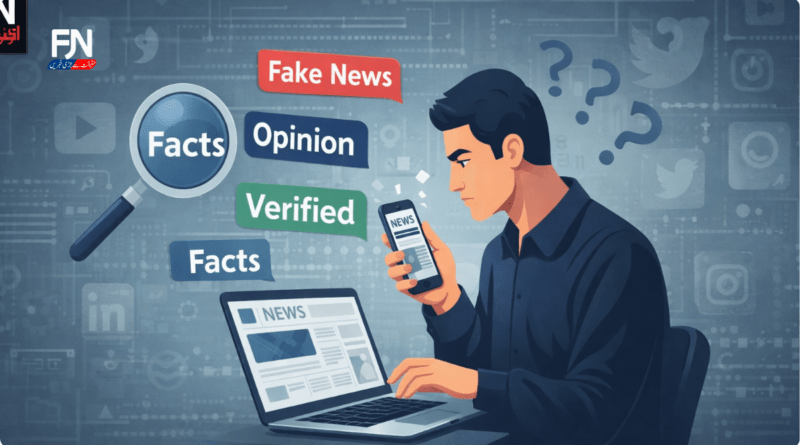
Media Literacy and Critical Thinking: The Ultimate Guide for the Digital Age 206
Introduction
Media literacy and critical thinking are essential skills in the digital age. In a world flooded with news, social media posts, and online content, not everything we see is accurate or unbiased. Today’s audiences need the tools to question information and identify misinformation. By combining media literacy—the ability to access, analyze, and create media content—with critical thinking—the habit of logical analysis and skepticism—individuals can better discern fact from fiction. This guide explains key definitions, principles, and practical steps to strengthen these skills.
Fake news and disinformation often spread rapidly online, making media literacy vital for protecting ourselves. UNESCO emphasizes that media literacy provides a set of skills enabling people “to engage critically with information, navigate the online environment safely, and help build trust in our information ecosystem”. In practical terms, media literacy means understanding how media messages are crafted. For example, it involves decoding words and images to assess how they influence our perceptions and beliefs. The National Association for Media Literacy Education (NAMLE) offers a widely cited definition: media literacy is the ability to “access, analyze, evaluate, create, and act using all forms of communication”. In other words, a media-literate person not only consumes news and entertainment but also thinks about who made it, why it was made, and what effects it might have.
Media literacy matters because our information environment is full of manipulation. A 2021 Inter-American Development Bank report stresses that media literacy education is a crucial tool for combating propaganda and misinformation. When credible news sources are scarce, people may fall back on rumors or content designed to mislead. By learning media literacy, individuals can spot signs of bias or falsehood in stories about politics, health, or climate issues. For instance, recognizing sensational headlines or missing context can prevent misinterpretation of facts. Building media literacy skills also helps preserve trust in factual reporting and supports healthy public dialogue.
What is Critical Thinking?
Critical thinking is the habit of evaluating information and arguments logically rather than accepting them at face value. Experts define it as gathering and analyzing information to make a rational judgment. Critical thinkers pay attention to evidence, examine assumptions, and understand their own biases. In practice, this means asking questions like: Who created this information? What evidence supports it? Could the author have motives that affect the content? For example, if you read a news article claiming a miraculous cure, a critical thinker would look for clinical studies or expert opinions before believing the claim.
Effective critical thinking requires healthy skepticism. We must be open to new ideas but rely on reason rather than emotions when evaluating claims. In educational settings, scholars stress teaching these skills early. One recent review highlights that critical thinking is an “essential skill for identifying fake news,” recommending that information literacy and critical thinking be explicitly included in school curricula. In fact, researchers argue that media literacy and critical thinking should be developed together in our modern information age, since both skills reinforce each other. A media-savvy citizen who thinks critically is more likely to question a misleading advertisement or viral rumor instead of taking it for granted.
Key Concepts and Principles
Media literacy and critical thinking share a lot of common ground. Both involve habits of inquiry and reflection. For instance, an important concept in media literacy is that all media messages are constructed—from news articles to social media posts. This means someone made choices about what to show, what words to use, and what to leave out, often to convey a specific message or bias. Recognizing this helps us analyze media content more carefully. Similarly, critical thinking reminds us to challenge assumptions behind a message, whether it comes from a TV ad or a friend’s status update.
Both skill sets emphasize active participation. It’s not enough to passively scroll through your feed or watch the news; you should ask questions. Good questions include: Who produced this message? Why was it created? How does it make me feel? What evidence is provided? In classroom media literacy frameworks, these steps often form a five-stage process:
-
Description – noting what the media piece says (who, what, where, when).
-
Analysis – examining how it is constructed (techniques, tone, omissions).
-
Interpretation – considering its meaning and purpose.
-
Evaluation – assessing credibility, reliability, and impact.
-
Engagement – deciding how to respond (e.g. fact-checking further or discussing it).
By following this critical process, anyone can break down a news story or advertisement into manageable parts and make more informed judgments.
Experts also point out that media literacy intersects with other literacies. For example, information literacy—the ability to find and evaluate all kinds of information—is at the heart of both media literacy and critical thinking. Critical thinking skills are involved whenever we evaluate a source, and media literacy applies those skills specifically to audio, visual, and digital content. As the Texas Department of Education notes, digital citizenship (responsible online behavior) ultimately relies on mastering these literacies. In short, media literacy and critical thinking are not isolated skills; they expand our overall literacy in a media-filled world.
Real-World Examples
Consider a scenario: You see a social media post claiming a celebrity has died, but it’s from an unknown blog. A media-literate person would immediately question the source and look for coverage from established news outlets. A critical thinker would check multiple sources and look for corroboration before accepting it as true. This approach likely reveals the claim as a hoax.
Another example: During a public health crisis, misinformation about cures or causes can spread quickly. Individuals with media literacy may spot cues like sensational wording or missing details and seek out fact-checkers or official health websites. Critical thinking then helps them interpret conflicting reports and decide what advice to trust.
These examples show how combining media literacy (knowing where to look, recognizing official institutions) and critical thinking (asking the right questions, analyzing evidence) can prevent the spread of false information. Many educators now teach news literacy, including skepticism and verification techniques, because they see the impact: students who are news-literate tend to be more motivated to stay informed and more aware of bias in reporting.
Myths vs. Facts
-
Myth: Media literacy means distrusting all media. Fact: Media literacy means evaluating media critically, not ignoring it altogether. It gives you tools to discern credibility, not just to become cynical. In fact, understanding media helps you appreciate quality journalism while recognizing biased or unreliable sources.
-
Myth: Critical thinking is an innate talent or too hard to learn. Fact: Like any skill, critical thinking can be taught and practiced. Research shows even students can improve their analysis with training and guidance. Everyone can benefit from learning how to evaluate evidence and question assumptions.
-
Myth: Only experts need media literacy and critical thinking. Fact: In today’s world, everyone encounters news and information, so these skills are useful for all ages. Teaching media literacy and critical thinking broadly helps society stay informed and engaged.
Actionable Tips
To build these skills, start with simple habits:
-
Check the source: Look up the author, website, or publication. Is it reputable? What is its purpose or funding?
-
Cross-verify: See if multiple independent sources report the same information. Be wary if only one obscure site has a sensational claim.
-
Question motivations: Ask why a piece was created. Is it to inform, persuade, sell something, or push an agenda? Ads and sponsored content often have subtle biases.
-
Analyze content cues: Pay attention to language (emotional vs. factual tone), images (are they doctored or taken out of context?), and missing information.
-
Think before sharing: If something seems questionable, pause and fact-check it first. Tools like reputable fact-checkers or a quick web search can help verify claims.
-
Diversify your media diet: Consume news from a variety of reliable outlets across different perspectives. Seeing multiple viewpoints helps you notice bias and form a balanced view.
-
Keep learning: Practice by analyzing a news article or ad each day. Over time, these critical habits become second nature.
Steps for Critical Analysis
One helpful approach is to apply the five-step process to any media message:
-
Describe: Who created it? What is the message?
-
Analyze: What techniques are used? Is there bias or missing context?
-
Interpret: What is the intended meaning or purpose?
-
Evaluate: Is it credible? Check if facts are cited and if experts are named.
-
Engage: Decide your response. Will you seek more information, share it with caution, or ignore it?
Using these steps on a news story or social media post can turn a confusing message into clear questions and answers.
Conclusion
Media literacy and critical thinking together equip us to navigate the complex media landscape. By learning to question and investigate information, we protect ourselves from manipulation and contribute to a well-informed community. In short, developing these skills is crucial for participating in a democratic society and making smart personal decisions. For example, our articles on [media literacy importance] and [media literacy definition components] delve deeper into why these skills matter and what they involve. Building on those, combining media literacy with critical thinking gives you a robust defense against fake news and sensationalism.
Investing effort in these skills pays off by keeping you informed and empowered. As one expert summarized, “Media literacy education is a tool for combating mis/disinformation”. By practicing critical thinking daily and encouraging others to do the same, we can all help foster a more truthful information environment.
Frequently Asked Questions
Q: What is media literacy?
Media literacy is the ability to critically engage with all forms of media. It includes skills like decoding messages, recognizing who created content and why, evaluating its credibility, and even creating your own media. Essentially, media literacy means not just passively consuming media but actively thinking about how and why media messages are constructed.
Q: What are the 4 C’s of critical thinking?
The 4 C’s are often cited as Communication, Collaboration, Creativity, and Critical thinking itself. In other words, key aspects of critical thinking include not only analyzing information but also communicating ideas effectively, working with others to solve problems, and using creative reasoning to find solutions.
Q: What are the five steps of the critical process in media literacy?
These steps help analyze any media message:
(1) Description – note what the content says;
(2) Analysis – examine how it is presented;
(3) Interpretation – determine the message or intent;
(4) Evaluation – judge its credibility and value;
(5) Engagement – decide how to respond or what action to take (like fact-checking or discussing it). Together, they guide users through the critical consumption of media.
Q: How are critical thinking and literacy related?
Critical thinking and (media) literacy go hand in hand. Critical thinking provides the reasoning skills needed to analyze information, while literacy provides the content to analyze. For example, information literacy (knowing how to find and use information) is a core part of media literacy, and both require skepticism and evaluation to make sense of what we read and hear.
Q: What are some examples of critical literacy?
Critical literacy means reading texts (broadly defined) with a questioning mind. Examples include analyzing a news article for bias, questioning the values in a movie or advertisement, or discussing the power dynamics in a novel. Basically, any time you look for underlying messages or perspectives in what you read, watch, or listen to, you’re using critical literacy skills.
Q: What are the core principles of media literacy?
Core principles include recognizing that all media messages are constructed (with choices behind every piece of media); understanding that media messages have purposes (economic, ideological, or entertainment); realizing that people interpret messages differently based on their own experiences; and knowing that media and audiences influence each other. In essence, media literacy teaches us to see how media shapes society and our views.
Q: What are 10 examples of media?
Media come in many forms. Examples include: 1) Television broadcasts; 2) Newspapers and magazines; 3) Social media platforms (Facebook, Twitter, Instagram, etc.); 4) Online news websites; 5) Radio and podcasts; 6) Films and videos; 7) Music and streaming services; 8) Advertisements (online, billboards, print); 9) Blogs and forums; 10) Books and e-books. Each type conveys information differently, and literacy skills apply to all of them.
Q: What are the 4 types of information literacy?
Information literacy is often divided into categories such as Basic IL (identifying when information is needed and how to locate it), Library IL (navigating library databases and resources), Media IL (understanding media content and its influence), and Computer/Digital IL (using computers and technology tools effectively). These categories overlap and together help a person find, evaluate, and use information responsibly.
Read More!
Sources
-
UNESCO (Media and Information Literacy)
-
National Association for Media Literacy Education (via MediaLiteracyNow.org)
-
Inter-American Development Bank, Skills for Life: Media Literacy and Critical Thinking
-
NIH/PMC, The Use of Critical Thinking to Identify Fake News: A Systematic Literature Review
-
Novitskyi et al., Fostering Media and Information Literacy and Critical Thinking Skills in the Digital Age
