
Fact-Checking for Students: 12 Essential Skills to Spot Misinformation in the Digital Age
Introduction
In a world where students consume news through TikTok, Instagram, AI chatbots, and Google summaries, fact-checking for students has become a core academic and life skill. Research from Stanford University has repeatedly shown that many students struggle to distinguish credible information from misleading or false content online. The challenge is no longer access to information—it’s knowing what to trust.
From AI-generated answers to viral social media claims, students face an environment where misinformation spreads faster than ever. Colleges, educators, and employers increasingly expect students to verify facts, evaluate sources, and demonstrate digital literacy. This guide explains what fact-checking means for students, why it matters, how professionals do it, and how learners can apply these skills in school assignments and everyday online life.
At Fact Nama, we believe that empowering students with fact-checking skills is essential for informed citizenship, academic success, and responsible digital engagement.
What Is Fact-Checking for Students?
Fact-checking for students is the process of verifying claims, data, quotes, and sources before accepting or using information in assignments, research, or discussions. Unlike simple proofreading, fact-checking focuses on accuracy, credibility, and context.
For students, fact-checking typically involves:
-
Verifying facts with multiple reliable sources
-
Identifying whether a claim is opinion, misinformation, or evidence-based
-
Evaluating who created the information and why
Fact-checking is not about distrust—it’s about informed judgment.
Why Fact-Checking Matters More Than Ever
1. The Rise of Misinformation and AI
According to the World Economic Forum, misinformation remains one of the top global risks. Generative AI tools can produce convincing but incorrect content, making AI fact-checking for students increasingly important.
2. Academic Integrity
Colleges expect students to submit work based on verified sources. Incorrect facts—even when unintentional—can weaken credibility and grades.
3. Civic and Media Literacy
Students who fact-check are less likely to fall for political misinformation, manipulated images, or misleading headlines.
Common Situations Where Students Must Fact-Check
-
Research papers and essays
-
AI-generated summaries or chatbot answers
-
Social media claims and viral videos
-
Historical quotes and statistics
-
Scientific or health-related claims
Even widely repeated information can be wrong.
Fact-Checking vs Proofreading vs Copy Editing
Many students confuse these terms:
-
Fact-checking: Verifying accuracy of information
-
Proofreading: Fixing grammar and spelling
-
Copy editing: Improving clarity, structure, and consistency
Fact-checking often overlaps with copy editing, but its primary focus is truth—not language.
How Professional Fact-Checkers Work (And What Students Can Learn)
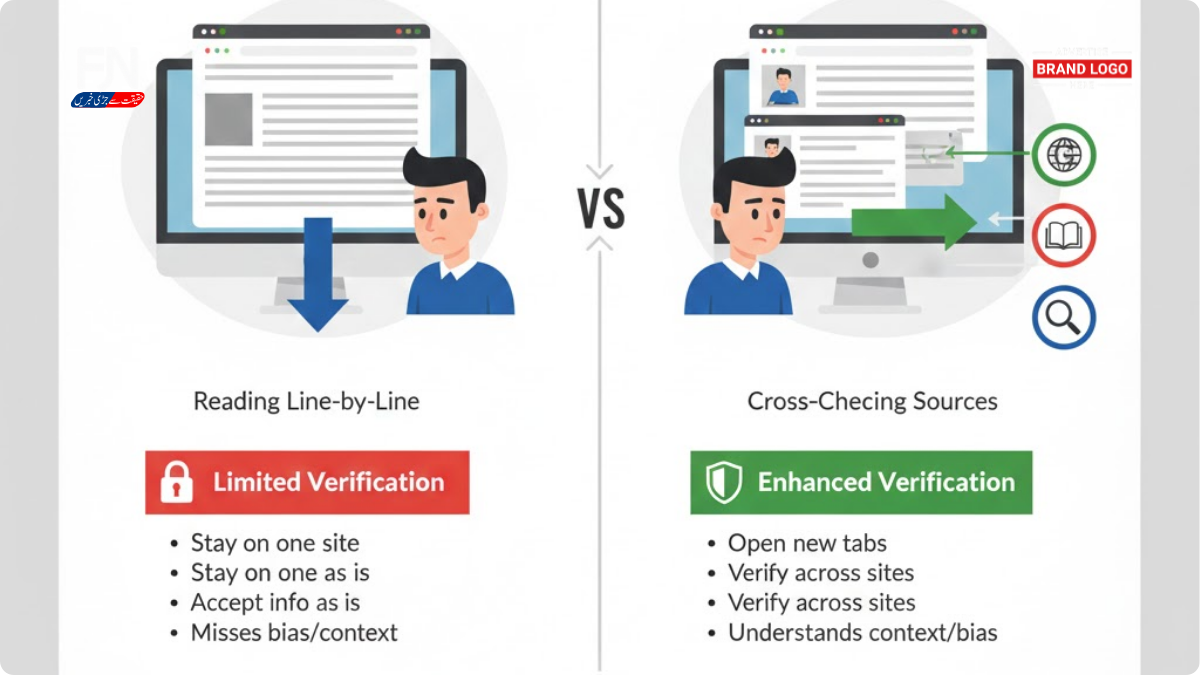
Professional fact-checkers use a method known as lateral reading—a technique studied extensively by Stanford’s History Education Group.
Lateral Reading Explained
Instead of reading one article deeply, fact-checkers:
-
Open new tabs
-
Search the organization or author
-
Compare claims across trusted sources
Students trained in lateral reading improved their ability to spot unreliable information by over 70%, according to Stanford research.
Step-by-Step Fact-Checking Process for Students
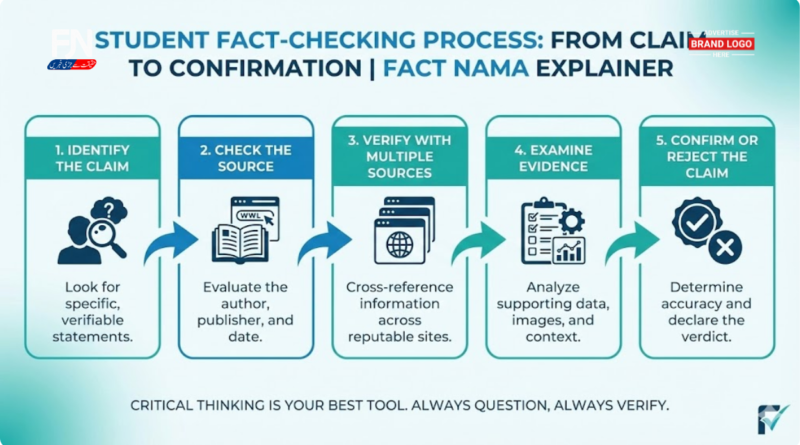
Step 1: Identify the Claim
What exactly is being stated? Is it a fact, opinion, or prediction?
Step 2: Check the Source
Ask:
-
Who is the author or organization?
-
Do they have expertise or credentials?
-
Is there transparency (About page, contact info)?
Step 3: Verify with Multiple Sources
Look for confirmation from:
-
Reputable news outlets
-
Academic journals
-
Government or university websites
Step 4: Examine Evidence
Are statistics cited? Are studies peer-reviewed? Is context missing?
Step 5: Watch for Bias and Emotional Language
Sensational headlines and emotionally charged wording are common red flags.
Trusted Fact-Checking Resources for Students
Here are widely recognized, nonpartisan tools useful for students:
-
FactCheck.org – University-based political fact-checking
-
PolitiFact – Rated truth scale with source links
-
Snopes – Internet rumors, hoaxes, and viral claims
-
Media Bias/Fact Check – Source reliability and bias analysis
-
Internet Archive (Wayback Machine) – Verify deleted or changed content
🔗 External authoritative reference: Stanford History Education Group (SHEG) research on online credibility evaluation.
Using AI Responsibly: Fact-Checking AI Content
AI tools can assist learning—but they can also hallucinate facts.
Best practices for students:
-
Never cite AI as a primary source
-
Always verify AI outputs with real sources
-
Double-check dates, statistics, and quotes
AI is a starting point—not an authority.
Myths About Fact-Checking for Students
Myth 1: Colleges Don’t Fact-Check Student Work
Reality: Instructors may not check every fact, but incorrect information affects credibility and grading.
Myth 2: Wikipedia Is Always Unreliable
Reality: Wikipedia can be a useful starting point—especially its references.
Myth 3: Professional-Looking Sites Are Trustworthy
Reality: Appearance does not equal accuracy.
Expert Perspective: Why Students Struggle With Online Information
Professor Sam Wineburg of Stanford explains that students often apply print-era reading habits to digital content. The internet requires skepticism, cross-checking, and speed—skills rarely taught explicitly in classrooms.
Teaching fact-checking isn’t about cynicism. It’s about empowering students to ask better questions.
Practical Fact-Checking Tips Students Can Use Today
-
Google the claim, not just the headline
-
Add words like “fact check,” “study,” or “source” to searches
-
Read beyond the first result
-
Avoid single-source reporting
-
Save a personal list of trusted websites
These habits build long-term academic confidence.
FAQs: Fact-Checking for Students
Do colleges actually fact-check student assignments?
They may not verify every claim, but incorrect facts weaken arguments and credibility—and plagiarism software can flag suspicious content.
Is fact-checking effective?
Yes. Multiple studies show fact-checking improves critical thinking and reduces belief in false claims.
Are proofreaders being replaced by AI?
AI assists editing, but human fact-checking remains essential—especially for context and judgment.
Can universities detect ChatGPT use?
Some institutions use detection tools, but policies vary. Transparency and verification are key.
What’s another word for fact-checking?
Verification, source validation, or accuracy checking—depending on context.
Conclusion: Why Fact-Checking Is a Student Superpower
Fact-checking for students is no longer optional—it’s essential. In an age of AI-generated content, viral misinformation, and endless information streams, the ability to verify facts separates passive consumers from informed thinkers.
By learning how to evaluate sources, read laterally, and question claims, students gain skills that extend far beyond the classroom. These habits build academic integrity, digital literacy, and lifelong critical thinking.
To deepen your understanding, explore related Fact Nama guides on information integrity and professional verification practices, and continue building your fact-checking toolkit.
Sources
BBC, Stanford History Education Group, FactCheck.org, PolitiFact, Snopes, World Economic Forum
Read our previous articles on Fact Nama:
