
What is the Difference Between Misinformation Disinformation and Malinformation? A Complete 2026 Guide
Introduction
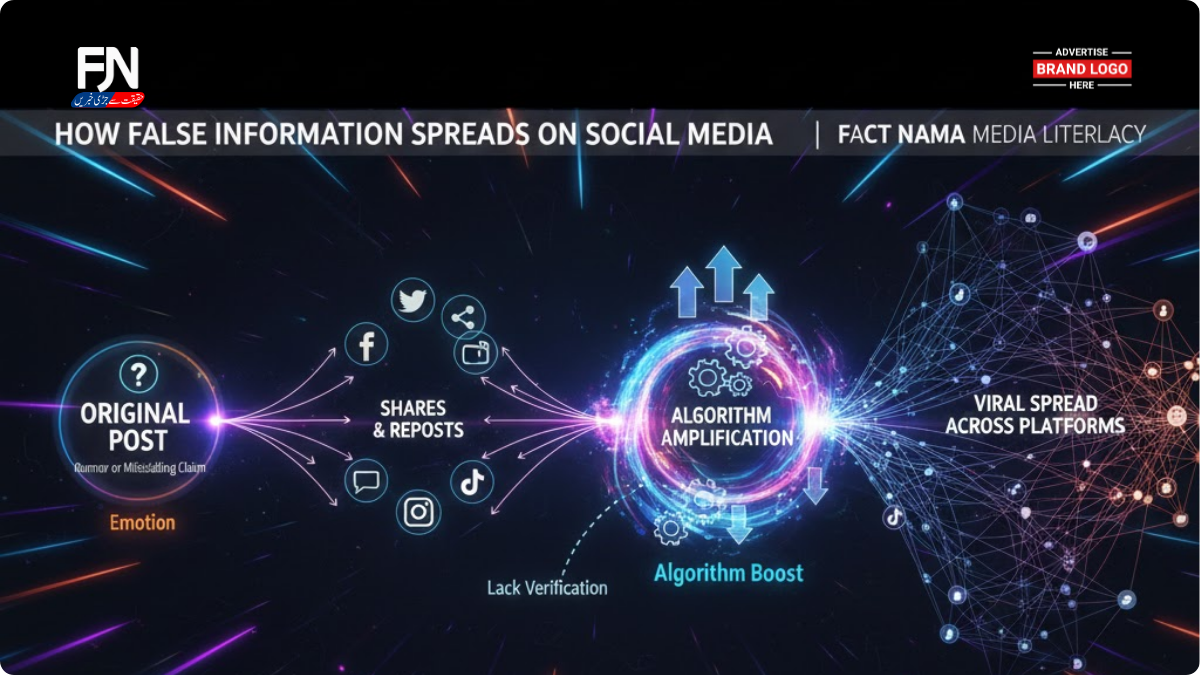
In today’s digital-first world, false and misleading information spreads faster than ever before. Social media, messaging apps, and even trusted platforms can unintentionally amplify claims that are inaccurate, deceptive, or taken out of context. This has made one question increasingly important for readers, policymakers, and journalists alike: what is the difference between misinformation, disinformation, and malinformation?
While these terms are often used interchangeably, they describe very different phenomena with distinct intentions, impacts, and risks. Understanding these differences is essential for navigating news responsibly, evaluating online content, and protecting democratic discourse.
This Fact Nama guide breaks down each concept in clear, practical terms, supported by real-world examples, psychological research, and expert insights. Whether you are a casual news reader or a digital professional, this article will help you recognize misleading information—and respond to it wisely.
Why Understanding the Difference Matters
False information does not just confuse people; it can influence elections, damage reputations, undermine public health, and distort historical records. According to research cited by the World Economic Forum, misinformation and disinformation consistently rank among the top global risks due to their ability to erode trust at scale.
Knowing what is the difference between misinformation disinformation and malinformation allows readers to:
-
Evaluate intent behind a claim
-
Avoid spreading harmful content unintentionally
-
Hold institutions and platforms accountable
Defining the Three Terms Clearly
What Is Misinformation?
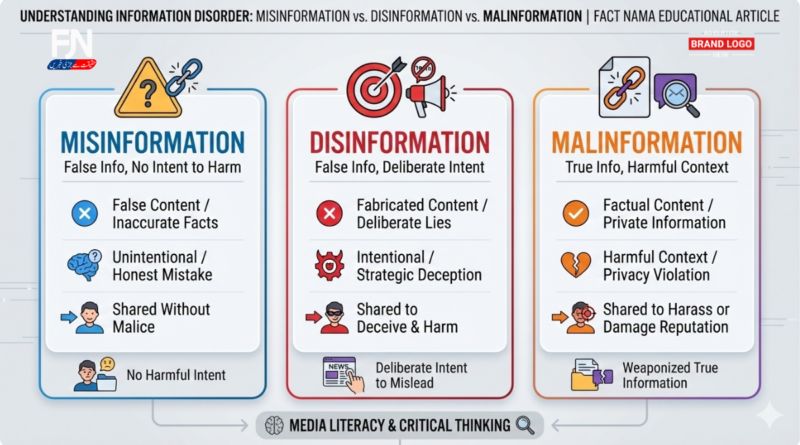
Misinformation refers to false or inaccurate information shared without the intent to deceive.
In most cases, the person spreading misinformation believes the information is true. This makes misinformation particularly dangerous because it spreads organically and quickly.
Common causes of misinformation include:
-
Misunderstood facts
-
Poor memory or misreporting
-
Outdated or incomplete data
-
Honest mistakes in journalism or social posts
Example:
A user shares an old study about COVID-19 treatments believing it is current, even though updated research has disproven it.
What Is Disinformation?
Disinformation is false information that is deliberately created and shared to deceive, manipulate, or cause harm.
Unlike misinformation, disinformation always involves intent. It is often organized, strategic, and politically or financially motivated.
According to the Oxford Dictionary, disinformation is “false information deliberately spread to deceive people.”
Common goals of disinformation:
-
Political manipulation
-
Financial scams
-
Reputation damage
-
Social division
Example:
A coordinated campaign spreading false election fraud claims to undermine trust in democratic institutions.
What Is Malinformation?
Malinformation involves information that is factually true but shared in a misleading context or with harmful intent.
This is often the most difficult form to detect because the information itself is not false.
Malinformation tactics include:
-
Leaking private messages
-
Sharing true data without context
-
Selectively editing facts to mislead
Example:
Publishing private emails that are real but framed to suggest wrongdoing where none exists.
Key Differences at a Glance
| Type | Is the Information True? | Intent to Harm? | Example |
|---|---|---|---|
| Misinformation | ❌ False | ❌ No | Sharing an incorrect statistic |
| Disinformation | ❌ False | ✅ Yes | Fake news campaigns |
| Malinformation | ✅ True | ✅ Yes | Context-stripped leaks |
This comparison highlights why asking what is the difference between misinformation disinformation and malinformation is more than a semantic debate—it is about intent, accuracy, and impact.
The Misinformation Effect in Psychology
What Is the Misinformation Effect?
The misinformation effect is a psychological phenomenon where a person’s memory of an event becomes distorted due to exposure to misleading information after the event.
Who Came Up With the Misinformation Effect?
The concept was pioneered by Dr. Elizabeth Loftus, a cognitive psychologist whose research showed how easily human memory can be altered.
What’s It Called When You Misremember Something?
This is known as false memory formation, often linked to the misinformation effect.
Do Eyewitnesses Provide Accurate Testimony?
Research published by the American Psychological Association suggests eyewitness memory is highly fallible, especially when influenced by leading questions or media narratives.
Can the Misinformation Effect Be Reversed?
Partially. Studies show that:
-
Early corrections work better than late ones
-
Clear explanations are more effective than simple denials
-
Repeated exposure to accurate information helps rebuild memory
Real-World Examples You’ve Likely Seen
Social Media and Viral Posts
-
A miscaptioned image spreading misinformation
-
A fake quote attributed to a public figure (disinformation)
-
A real video clip edited to remove crucial context (malinformation)
News and Politics
-
False polling data circulated intentionally
-
Leaked documents shared without full background
-
Headlines designed to mislead rather than inform
Common Myths About False Information
Myth 1: “Only fake news websites spread misinformation”
False. Trusted platforms and individuals can spread misinformation unintentionally.
Myth 2: “True information can’t be harmful”
Malinformation proves otherwise.
Myth 3: “I can always spot false information easily”
Psychological research shows even experts are vulnerable.
How to Protect Yourself From False Information
Actionable steps for readers:
-
Verify claims using multiple credible sources
-
Check publication dates and original context
-
Be cautious with emotionally charged content
-
Follow professional journalism standards
-
Pause before sharing
Fact Nama encourages readers to treat information responsibly—especially during breaking news events.
Expert Perspectives on the Information Crisis
According to Reuters Institute for the Study of Journalism, combating false information requires:
-
Platform accountability
-
Media literacy education
-
Transparent fact-checking
Journalists emphasize that trust is built through accuracy, context, and ethical reporting—core principles followed by Fact Nama.
Frequently Asked Questions (FAQs)
What is another term for the misinformation effect?
It is often referred to as memory contamination or false memory distortion.
What are some examples of the misinformation effect?
Leading questions in interviews, misleading headlines, or repeated exposure to incorrect details.
What is disinformation in simple terms?
False information spread intentionally to deceive people.
Is malinformation illegal?
Not always. While unethical, it may still be legal depending on jurisdiction.
Why is misinformation so effective?
Because it exploits emotional responses, cognitive biases, and trust in familiar sources.
Conclusion
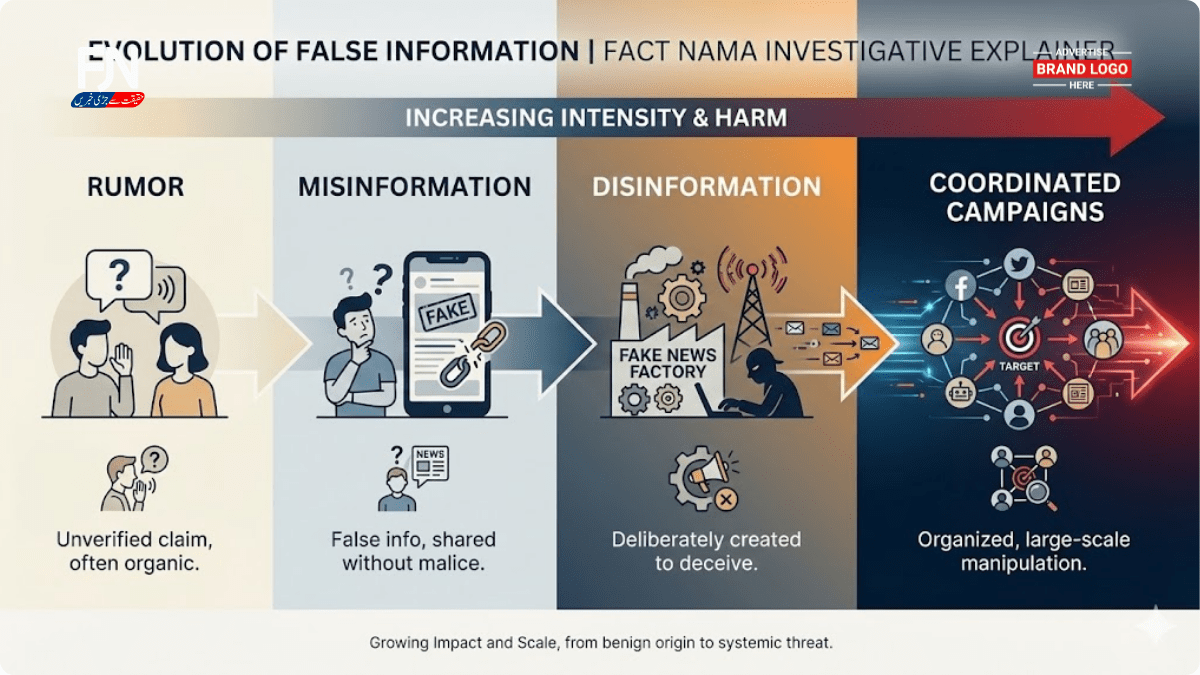
Understanding what is the difference between misinformation disinformation and malinformation is essential in an era where information shapes opinions, policies, and personal decisions. Each form carries unique risks, driven by varying levels of accuracy and intent.
By learning how these concepts differ—and how they operate in real life—readers can become more informed, cautious, and responsible participants in the digital ecosystem.
For more fact-based explainers, media analysis, and verified news coverage, explore related articles on Fact Nama In-Depth Analysis Section , where accuracy and context always come first.

Pingback: Media Literacy Definition & Key Components: 9 Essential Skills Everyone Needs in the Digital Age » Fact Nama