
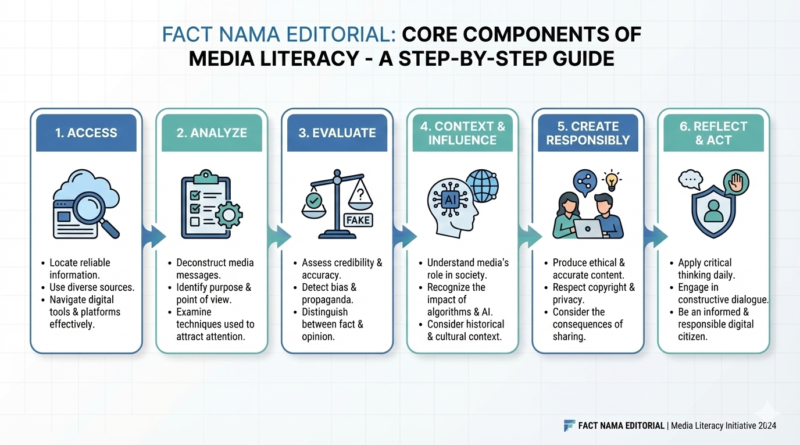
Media Literacy Definition Components: 6 Core Elements Everyone Must Understand
Introduction
Understanding media literacy definition components is essential in a world where information moves faster than verification. From social media posts and online news to AI-generated content and viral videos, modern audiences face an overwhelming volume of media every day. Without a clear framework for evaluating what we see, hear, and share, it becomes easy to accept misleading or biased information as fact.
Media literacy provides that framework. It breaks down how media messages are created, why they are distributed, and how they influence beliefs, behavior, and culture. Rather than focusing on a single skill, media literacy is built on several interconnected components that work together to strengthen critical thinking.
This article explains the definition of media literacy and its core components, why they matter, and how individuals can apply them in daily life to become informed, responsible media users.
What Is Media Literacy? (Clear Definition)
Media literacy is the ability to access, analyze, evaluate, create, and act on media messages across different platforms and formats. These platforms include traditional media such as television and newspapers, as well as digital media like social networks, podcasts, search engines, and AI tools.
At its core, media literacy helps people:
-
Question information instead of accepting it blindly
-
Understand how media messages are constructed
-
Recognize bias, intent, and influence
-
Participate responsibly in media creation and sharing
The media literacy definition components provide a structured way to apply these skills consistently, regardless of the medium or message.
Why Understanding Media Literacy Components Matters
Media literacy is not a single ability—it is a system of skills. Knowing the components helps individuals apply media literacy more effectively instead of relying on intuition alone.
According to surveys by US academic institutions and nonprofit media organizations, most Americans believe media literacy skills are essential for identifying misinformation, yet many are unsure how to practice them. Breaking media literacy into components makes the concept practical, teachable, and measurable.
The Core Media Literacy Definition Components
1. Accessing Media Information
Access refers to the ability to find, use, and navigate media content across platforms.
This component includes:
-
Knowing where to find credible news sources
-
Using search engines effectively
-
Understanding paywalls, algorithms, and platform limitations
-
Recognizing the difference between original reporting and reposted content
Without proper access skills, audiences may rely on a narrow range of sources, increasing the risk of misinformation exposure.
2. Analyzing Media Messages
Analysis involves breaking down media messages to understand how and why they were created.
Key questions include:
-
Who created this message?
-
What techniques are used to attract attention?
-
What information is included or omitted?
-
Who is the intended audience?
This component helps users recognize framing, emotional triggers, visuals, headlines, and language choices that influence perception.
3. Evaluating Credibility and Accuracy
Evaluation is one of the most critical media literacy definition components. It focuses on judging whether information is reliable, accurate, and trustworthy.
Evaluation skills include:
-
Checking sources and author credentials
-
Comparing information across multiple outlets
-
Distinguishing fact from opinion
-
Identifying misinformation and disinformation
This component directly connects to fact-checking practices and is essential during elections, public health crises, and breaking news events.
4. Understanding Media Context and Influence
Media messages do not exist in isolation. Context refers to the social, political, economic, and cultural environment in which media is created and consumed.
This component helps users understand:
-
How media ownership shapes narratives
-
How advertising and sponsorship influence content
-
How algorithms amplify certain messages
-
How historical and cultural context affects interpretation
Understanding context allows audiences to see beyond surface-level messaging.
5. Creating Media Responsibly
Media literacy is not only about consumption—it also involves ethical media creation.
This component includes:
-
Sharing accurate information
-
Avoiding harmful stereotypes
-
Citing sources properly
-
Understanding the impact of one’s own posts
In the digital age, everyone is a content creator. Media-literate individuals recognize their responsibility when posting, commenting, or sharing content online.
6. Reflecting and Taking Informed Action
The final component focuses on reflection and responsible action.
This means:
-
Thinking before sharing content
-
Engaging respectfully with opposing viewpoints
-
Correcting misinformation when appropriate
-
Applying media literacy skills consistently
This component transforms media literacy from a passive skill into an active civic practice.
Core Principles Behind Media Literacy Components
While components describe skills, principles explain how they function. Commonly accepted principles include:
-
Media messages are constructed
-
Media messages shape reality
-
Different audiences interpret media differently
-
Media has commercial, political, and social purposes
-
Media influence power and culture
These principles support and connect all media literacy definition components.
Media Literacy vs Information Literacy: Key Differences
Although closely related, they are not the same.
-
Information literacy focuses on locating, evaluating, and using information effectively.
-
Media literacy focuses on understanding how media messages are created, framed, and distributed.
Media literacy incorporates information literacy but adds analysis of persuasion, bias, visuals, and cultural impact.
Common Myths About Media Literacy Components
Myth 1: Media literacy is only for students
Reality: Adults are equally vulnerable to misinformation.
Myth 2: Media literacy limits free thinking
Reality: It enhances independent thinking by encouraging questioning.
Myth 3: Trusted sources never need evaluation
Reality: Even credible outlets should be read critically and contextually.
How to Practice Media Literacy in Daily Life
Practical actions include:
-
Cross-checking news before sharing
-
Reading beyond headlines
-
Following diverse sources
-
Using reverse image searches
-
Asking “why was this created?”
These habits activate all media literacy definition components simultaneously.
Expert Perspective on Media Literacy Education
Media researchers emphasize that media literacy equips people to become active participants rather than passive consumers. As AI-generated content increases, experts agree that structured critical thinking skills will be essential for navigating digital environments responsibly.
FAQs!
What are the components of media literacy?
The main components include accessing, analyzing, evaluating, understanding context, creating responsibly, and taking informed action.
What are the core principles of media literacy?
They include understanding that media is constructed, influential, and shaped by social, political, and economic forces.
How is media literacy different from information literacy?
Information literacy focuses on finding information, while media literacy focuses on understanding how messages are created and influence audiences.
Why are media literacy components important?
They help individuals identify misinformation, think critically, and engage responsibly with media.
Are media literacy components relevant in the AI era?
Yes. They are essential for evaluating AI-generated content and understanding algorithmic influence.
Conclusion
Understanding media literacy definition components provides a practical roadmap for navigating today’s complex media environment. These components work together to help individuals analyze information critically, recognize bias, and participate responsibly in digital spaces.
As media platforms evolve and misinformation becomes more sophisticated, media literacy remains a foundational skill for informed citizenship. Readers interested in deeper exploration can discover related Fact Nama guides on misinformation, fact-checking, and media literacy fundamentals.
Suggested Internal Links (Fact Nama)
-
Difference Between Misinformation, Disinformation, and Malinformation
-
Media Literacy Importance: 7 Powerful Reasons It Matters in the Digital Age
Sources & References
-
News Literacy Project
-
UNESCO Media and Information Literacy Framework
-
Academic research on digital media literacy
