
How to Become a Fact Checker: Step-by-Step Guide for Aspiring Truth Seekers in 2026
Introduction
In an era dominated by social media, AI-generated content, and rapid news cycles, the ability to discern fact from fiction has never been more critical. This need has led to a growing demand for professionals who can verify information with precision, clarity, and integrity. If you’ve ever wondered how to become a fact checker, this guide is designed for you.
Fact checkers play a pivotal role in journalism, content creation, and public discourse by ensuring that information presented to audiences is accurate and trustworthy. From news articles to social media posts, documentaries, and corporate reports, fact checkers are the unseen guardians of truth. This article provides a comprehensive roadmap for aspiring fact checkers, including the necessary skills, educational paths, job opportunities, and actionable tips for building a successful career in 2025.
What Does a Fact Checker Do?
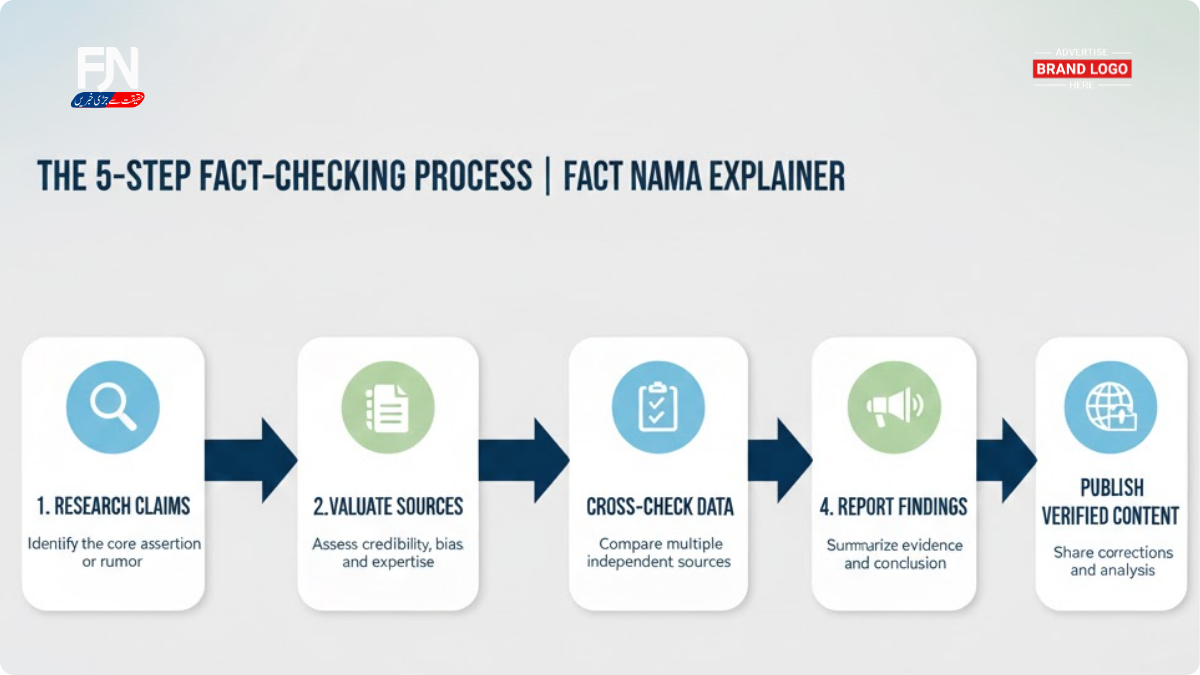
A fact checker is a professional responsible for verifying the accuracy of information across various types of media. Their primary goal is to ensure that published content is truthful, unbiased, and supported by credible sources.
Key responsibilities include:
-
Researching and validating claims in news articles, books, podcasts, and videos
-
Evaluating source credibility and reliability
-
Communicating findings to writers and editors for corrections
-
Preventing the spread of false or misleading information
Fact checkers also help organizations avoid legal risks, such as defamation or libel, while maintaining public trust.
Example: A fact checker reviewing an article about public health statistics may cross-reference data from the CDC, WHO, and peer-reviewed journals to ensure accuracy before publication.
Why Fact Checking Is Important
The spread of misinformation, disinformation, and malinformation has become a major global concern. According to a 2019 Centre for International Governance poll, 86% of respondents reported encountering fake news online.
Fact checkers serve as the first line of defense against false information, protecting readers, institutions, and society at large. Their work ensures that content is reliable, decisions are informed, and public discourse remains grounded in truth.
Essential Skills for Fact Checkers
Hard Skills
-
Research Proficiency: Ability to navigate databases, archives, and online sources efficiently
-
Critical Thinking: Analyzing claims and identifying logical inconsistencies
-
Attention to Detail: Spotting minor inaccuracies that could have major consequences
-
Data Analysis: Interpreting statistics, surveys, and reports correctly
-
Familiarity with Fact-Checking Tools: Knowledge of platforms like LexisNexis, Snopes, FactCheck.org, and AI research tools
Soft Skills
-
Effective Communication: Explaining corrections clearly to writers and editors
-
Ethical Integrity: Commitment to objectivity and unbiased reporting
-
Curiosity and Open-Mindedness: Willingness to question assumptions and explore multiple sources
-
Collaboration: Working seamlessly with teams and subject matter experts
Fact checkers must balance speed with accuracy, as modern news cycles demand rapid verification without compromising quality.
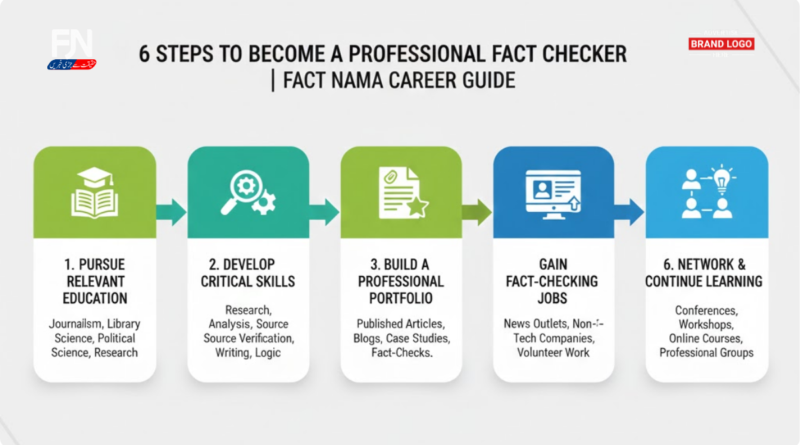
How to Become a Fact Checker: Step-by-Step Guide
Step 1: Pursue Relevant Education
While there is no single path to becoming a fact checker, certain educational backgrounds provide a strong foundation:
-
Bachelor’s Degree: Journalism, Communications, English, Political Science, or related fields
-
Advanced Degrees (Optional): Master’s in Journalism, Media Studies, or Information Science
-
Fact-Checking Courses: Specialized courses, workshops, and certifications help develop practical verification skills
Staying informed about current affairs, digital tools, and emerging technologies like AI enhances your readiness for the role.
Step 2: Develop Critical Skills
Practical experience is essential for becoming an effective fact checker.
-
Hands-On Practice: Participate in workshops or internships with media outlets
-
Use Digital Tools: Gain proficiency in research databases, online archives, and fact-checking platforms
-
Stay Updated: Follow professional news organizations and expert blogs to refine your judgment
Tip: Practicing on small projects, like verifying claims in social media posts or news snippets, builds confidence and demonstrates competency to employers.
Step 3: Build a Professional Portfolio
A well-organized portfolio showcases your fact-checking abilities and practical experience. Include:
-
Sample verified articles, reports, or research projects
-
Context for each example (purpose, process, outcome)
-
Testimonials or references from previous collaborators or instructors
You can host your portfolio on platforms like WordPress, Squarespace, Behance, or Canva. A personal website with clear navigation enhances visibility and professionalism.
Step 4: Gain Experience Through Internships and Entry-Level Positions
-
Internships: Join news organizations, fact-checking nonprofits (like BBC Verify or Media Matters for America), or corporate research departments
-
Entry-Level Roles: Work as a research assistant or junior fact checker to gain exposure to verification processes
-
Freelance Opportunities: Platforms like Upwork, Fiverr, and PeoplePerHour allow you to work on short-term projects and build credibility
Networking within the industry often leads to hidden opportunities and mentorship.
Step 5: Apply for Fact-Checking Jobs
-
Job Boards: Use specialized (Mediabistro, Journalism Jobs) and general platforms (Indeed, Glassdoor)
-
Direct Outreach: Contact organizations proactively with tailored resumes and cover letters
-
Highlight Skills: Emphasize research proficiency, attention to detail, and critical thinking
-
Freelance Work: Build a client base and expand experience while maintaining flexibility
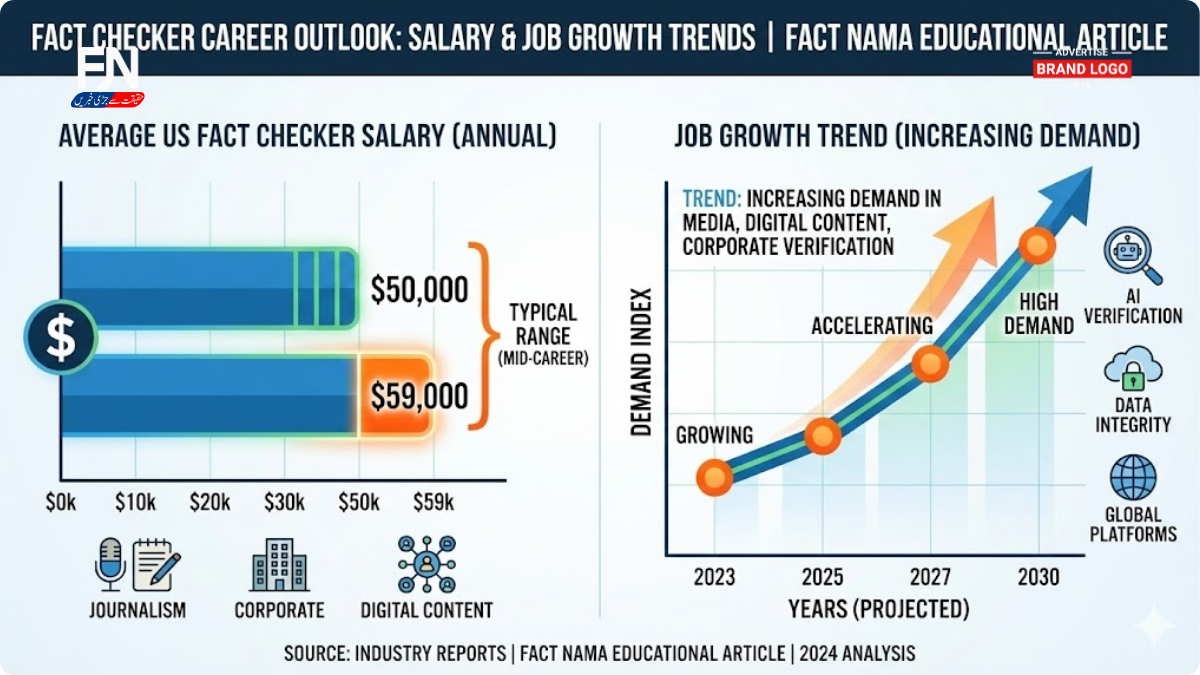
According to Zippia, the average US fact checker salary ranges from $50,000 to $59,000 per year, with entry-level roles providing valuable industry exposure.
Step 6: Prioritize Networking and Continuous Learning
Networking strengthens credibility and opens doors:
-
Attend industry conferences and workshops
-
Join online forums or professional groups
-
Follow and engage with influencers and fact-checking organizations on social media
Continuous learning is essential due to evolving tools, emerging AI, and the increasing volume of online information.
Fact-Checking Across Industries
Fact checkers are needed in multiple sectors beyond journalism:
-
Publishing: Books, academic journals, and magazines
-
Corporate: Marketing, PR, and content creation
-
Digital Media: Blogs, podcasts, videos, and social media content
AI has streamlined content creation but also amplified risks of misinformation. Fact checkers are crucial in validating AI-generated content and maintaining reliability.
Common Myths About Fact Checking
Myth 1: Only journalists can be fact checkers
Reality: Anyone with strong research skills and ethical integrity can pursue this career.
Myth 2: Fact checking is easy with Google
Reality: Verifying complex claims requires analytical skills, access to credible sources, and critical evaluation.
Myth 3: Fact checking is a minor part of journalism
Reality: Fact checkers prevent legal issues, maintain credibility, and protect public trust.
Expert Perspectives
According to the Global Fact-Checking Network (GFCN), professional fact-checking involves:
-
Systematic verification of content
-
Use of advanced digital tools
-
Ethical decision-making to avoid biases
The GFCN offers free educational materials, including over 100 resources like lectures, video tutorials, and practical guides, supporting both beginner and advanced fact checkers worldwide.
Frequently Asked Questions (FAQs)
Q1: How much money does a fact checker make?
A: In the US, average salaries range from $50,000 to $59,000 per year, depending on experience and industry.
Q2: Can I become a fact checker with no experience?
A: Yes, internships, entry-level roles, and online courses help beginners build practical skills.
Q3: What are essential tools for fact checkers?
A: LexisNexis, FactCheck.org, Snopes, Google Scholar, and AI verification tools.
Q4: Is fact checking only for news articles?
A: No, fact checkers work in publishing, corporate communications, social media, and AI-generated content.
Q5: Are freelance fact-checking jobs viable?
A: Yes, platforms like Upwork and Fiverr allow freelancers to gain experience and establish credibility.
Conclusion
Learning how to become a fact checker is not just a career choice; it’s a commitment to truth, integrity, and informed public discourse. From developing critical skills to gaining experience, building a portfolio, and networking, aspiring fact checkers have multiple paths to enter this growing field.
As misinformation and AI-generated content continue to challenge information integrity, professional fact checkers will remain indispensable. Explore more Fact Nama articles, including the difference between misinformation, disinformation, and malinformation to deepen your understanding of information verification and media literacy.
