
Critical Media Literacy Explained: How to Think Smarter in a Digital World IN 2026
Introduction
In a digital environment shaped by algorithms, advertising, and rapidly spreading information, simply knowing how to read media is no longer enough. Audiences today must understand who creates media, why it exists, and whose interests it serves. This is where critical media literacy becomes essential.
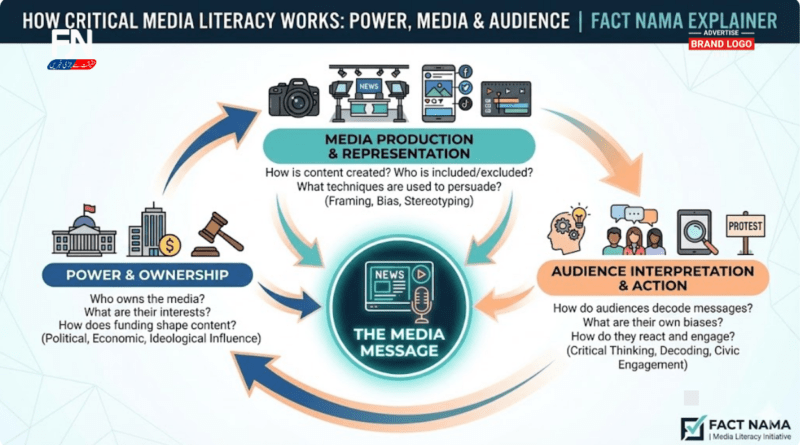
Critical media literacy goes beyond basic media skills. It encourages people to question power, representation, ownership, and ideology behind news, social media, entertainment, and digital platforms. From viral misinformation to subtle advertising tactics, media messages shape public opinion in ways that are often invisible.
For US readers navigating political polarization, artificial intelligence, and social media influence, critical media literacy provides a practical framework for informed citizenship. It helps individuals become thoughtful media consumers—and responsible creators—capable of distinguishing fact from manipulation while engaging ethically in the digital world.
What Is Critical Media Literacy?
Critical media literacy is an educational and analytical approach that examines how media messages are produced, distributed, and interpreted within social, political, and economic systems.
Unlike traditional media literacy, which focuses mainly on access and interpretation, critical media literacy emphasizes:
-
Power and ideology
-
Representation and bias
-
Ownership and control
-
Social justice and civic responsibility
Scholars such as Douglas Kellner and Jeff Share describe critical media literacy as a process that links reflection and action, encouraging audiences to question dominant narratives and challenge harmful stereotypes while recognizing positive media contributions.
Media Literacy vs Critical Media Literacy
Traditional Media Literacy
-
Focuses on understanding and interpreting media content
-
Teaches skills like identifying persuasive techniques
-
Emphasizes safe and effective media use
Critical Media Literacy
-
Examines who benefits from media messages
-
Questions systemic bias and power structures
-
Connects media analysis to democracy and social responsibility
-
Encourages media creation as a form of expression and resistance
In short, media literacy asks “what does this mean?”, while critical media literacy asks “why does this exist, and who does it serve?”
Why Critical Media Literacy Matters Today
1. Misinformation and Disinformation
False narratives spread faster than facts online. Critical media literacy equips users to evaluate sources, verify claims, and resist emotional manipulation—especially during elections, crises, or viral news cycles.
2. Algorithmic Influence
Social platforms curate content based on engagement, not truth. Understanding algorithms helps users recognize echo chambers and filter bubbles.
3. Media Ownership Concentration
In the US, a small number of corporations control much of mainstream media. Critical media literacy reveals how ownership shapes agendas, framing, and visibility.
4. Democracy and Civic Engagement
An informed public is essential to democracy. Critical media literacy strengthens civic reasoning, media accountability, and participation.
Core Components of Critical Media Literacy
1. Production
Media is intentionally created. This component analyzes:
-
Who produced the content?
-
What resources and technologies were used?
-
What economic or political interests are involved?
2. Representation
Media does not reflect reality—it constructs it.
-
Whose voices are included or excluded?
-
How are race, gender, class, and identity portrayed?
-
What stereotypes are reinforced or challenged?
3. Language and Techniques
Media uses symbols, visuals, sound, and language strategically.
-
Headlines, images, editing, and framing shape perception
-
Emotional triggers influence audience response
4. Audience
Audiences interpret media differently.
-
How are specific groups targeted?
-
How does personal experience affect interpretation?
-
What data is collected from users?
5. Power and Ideology
This critical layer examines:
-
Corporate, political, and cultural power
-
Ideologies embedded in narratives
-
How media maintains or challenges the status quo
The Critical Process in Media Literacy
Experts often describe critical media literacy as an inquiry-based process, not a checklist.
Step 1: Ask Questions
Who created this message? Why now? What is left out?
Step 2: Analyze Context
Consider historical, political, and economic backgrounds.
Step 3: Evaluate Credibility
Check sources, evidence, and author expertise.
Step 4: Reflect on Impact
How does this media influence beliefs, behavior, or emotions?
Step 5: Take Informed Action
Share responsibly, challenge misinformation, or create ethical media.
Examples of Critical Media Literacy in Practice
News Media
Analyzing how headlines frame political events differently across outlets.
Advertising
Examining how consumerism, beauty standards, or fear-based messaging influence behavior.
Social Media
Understanding influencer marketing, sponsored content, and algorithmic visibility.
Film and Entertainment
Identifying stereotypes, power dynamics, and cultural narratives.
Critical Media Literacy in Schools and Education
Many US schools now integrate critical media literacy into:
-
Social studies
-
English and media studies
-
Digital citizenship programs
According to research from Common Sense Media, students who receive media literacy education are better at identifying misinformation and understanding bias.
Educators emphasize discussion-based learning, collaborative inquiry, and real-world media analysis to build lifelong critical thinking skills.
Common Myths About Critical Media Literacy
Myth 1: It Promotes Cynicism
Reality: It promotes informed skepticism, not distrust of all media.
Myth 2: It Is Anti-Media
Reality: Critical media literacy values ethical journalism and positive media representation.
Myth 3: It Is Only for Students
Reality: Adults, professionals, voters, and parents all benefit equally.
Expert Perspectives
Media scholars emphasize that media is never neutral. According to research published by UNESCO, media literacy is a cornerstone of democratic resilience and digital citizenship.
The National Association for Media Literacy Education (NAMLE) highlights inquiry, reflection, and action as core principles of effective media literacy education.
Actionable Tips to Build Critical Media Literacy
-
Compare multiple news sources
-
Follow fact-checking organizations
-
Question emotionally charged headlines
-
Learn who owns the platforms you use
-
Reflect before sharing content online
FAQs: Critical Media Literacy
What do you mean by critical literacy?
Critical literacy examines how texts and media shape power, identity, and social structures.
What is media literacy and critical thinking?
Media literacy builds analysis skills; critical thinking applies reasoning to evaluate truth, bias, and credibility.
What are the five questions of media literacy?
Who created this? Why? Who is the audience? What techniques are used? What is omitted?
How is media literacy taught in schools?
Through inquiry-based learning, discussion, media analysis, and content creation.
What are the 4 C’s of digital literacy?
Critical thinking, communication, collaboration, and creativity.
Conclusion
Critical media literacy is no longer optional—it is a necessary skill for navigating today’s media-saturated world. By understanding power, representation, and ideology, individuals become more informed citizens and responsible media participants.
As misinformation, AI-generated content, and digital persuasion evolve, critical media literacy empowers audiences to engage thoughtfully rather than react emotionally.
To deepen your understanding, explore related Fact Nama guides on media literacy importance, fact-checking for students, and the difference between misinformation, disinformation, and malinformation.
Suggested Blogs (Fact Nama)
Sources
-
Pew Research Center
-
Common Sense Media
-
National Association for Media Literacy Education (NAMLE)
